

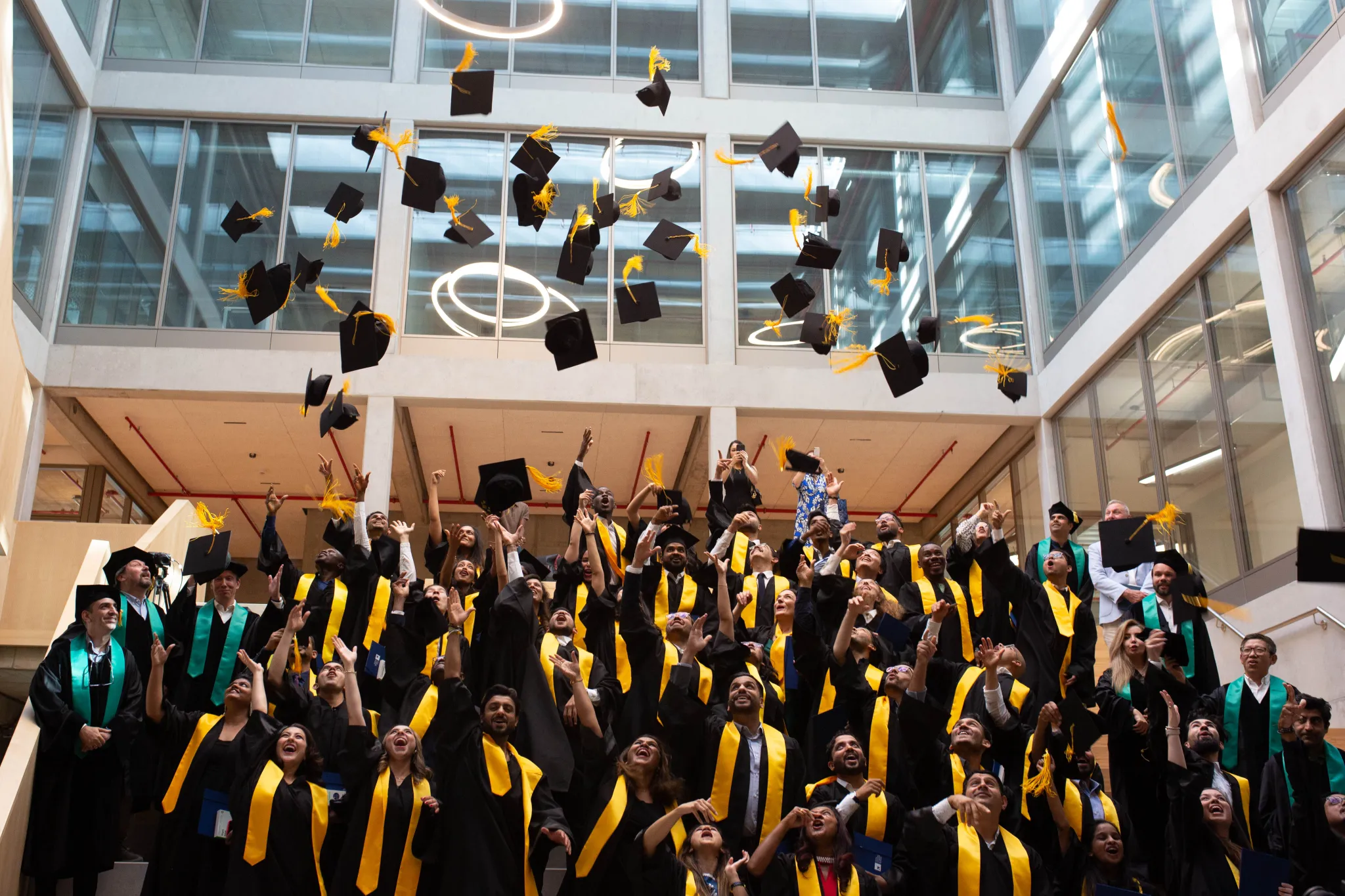
Our Team
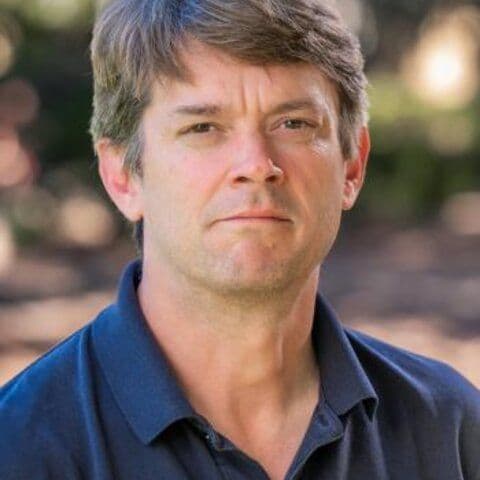
Dr. Oliver Fringer
Professor Stephen Fringer is a distinguished researcher whose work bridges environmental fluid mechanics, computational modeling, and high-performance scientific computing. At The Standard School of Machine Learning (TheSSML), he contributes an expansive interdisciplinary vision that integrates advanced numerical methods with modern machine learning techniques to understand and predict the behavior of complex natural systems. His decades of research on the physics of coastal oceans, rivers, lakes, and estuaries positions him as one of the leading voices in computational environmental dynamics, bringing both scientific depth and computational innovation to TheSSML’s mission.
Professor Fringer’s research centers on the development, refinement, and application of numerical models designed to simulate the fundamental processes governing natural water environments. From large-scale circulation patterns driven by tides and wind, to fine-scale turbulence, stratification, and mixing within estuarine ecosystems, his work captures the intricate, nonlinear relationships that shape aquatic dynamics. He builds and applies high-fidelity computational tools that simulate realistic, three-dimensional, time-dependent flows—tools essential for understanding how environmental systems respond to climate change, anthropogenic stressors, and natural variability. These simulations often require cutting-edge high-performance computing (HPC) approaches, including parallel algorithms, adaptive mesh refinement, and GPU-accelerated methods, all of which he uses to push scientific modeling beyond traditional boundaries.
A hallmark of Professor Fringer’s contributions is the seamless integration of physical theory and computational science. Unlike models that focus narrowly on specific scales or phenomena, his frameworks capture the broad spectrum of interacting processes that occur within natural water bodies. This includes stratification-driven circulation, internal waves, freshwater plumes, sediment transport, and turbulent mixing. Such a comprehensive modeling perspective allows for unprecedented accuracy in predicting environmental dynamics, thereby providing critical insights for coastal protection, ecological forecasting, resource management, and climate mitigation.
Professor Fringer’s educational background laid the perfect foundation for his interdisciplinary contributions. He earned his Bachelor of Science in Engineering (BSE) in Mechanical and Aerospace Engineering from Princeton University, where he built early expertise in fluid mechanics, thermodynamics, and computational simulation. He then pursued graduate studies at Stanford University, completing a Master of Science (MS) in Aeronautics and Astronautics in 1996. This period deepened his understanding of complex flow dynamics, numerical computation, and scientific programming—skills that later played a central role in his environmental modeling work.
His academic journey culminated with a PhD in Civil and Environmental Engineering, also at Stanford University, completed in 2003. During his doctoral studies, he focused on the development of advanced numerical methods for simulating stratified and turbulent flows, particularly within the coastal ocean. His dissertation work pioneered computational approaches that have since been widely adopted in environmental fluid mechanics laboratories around the world.
At TheSSML, Professor Fringer’s contributions extend far beyond traditional environmental engineering. He plays a vital role in guiding the application of machine learning, data-driven modeling, and AI-enhanced computational techniques to scientific problems that have traditionally relied exclusively on physics-based simulations. The synergy between physical modeling and machine learning has become a major frontier in environmental science, and Professor Fringer’s expertise positions him at the center of this emerging paradigm. By incorporating neural networks, hybrid models, reduced-order modeling, and data assimilation techniques, he empowers students to build next-generation computational tools that blend physical realism with modern computational intelligence.
One of his most impactful areas of work involves numerical simulation of the coastal ocean, where he investigates how waves, turbulence, salinity gradients, and stratification influence the movement of water, sediment, nutrients, and pollutants. These processes directly affect coastal erosion, aquatic ecosystem health, circulation patterns, and the resilience of coastal communities. His models help identify how extreme weather events—such as hurricanes, storm surges, and climate-driven changes—interact with marine environments. This work is deeply relevant for coastal engineering, marine ecology, and sustainability planning, making it highly valuable to both academic and policy communities.
In the domain of rivers and estuaries, Professor Fringer’s computational approaches capture dynamic processes such as tidal forcing, freshwater inflows, geomorphic change, sediment suspensions, and internal bores. Such modeling is essential for flood forecasting, river restoration, estuarine ecosystem conservation, and management of water resources. By integrating physics-informed machine learning tools into these simulations, he equips future researchers with the ability to analyze vast datasets, perform rapid scenario prediction, and incorporate observational data into computational frameworks.
His work on lakes and stratified water bodies examines how temperature gradients and density structures govern mixing, oxygen distribution, nutrient cycling, and the behavior of harmful algal blooms. These issues are increasingly critical as climate change alters the thermal properties of freshwater systems worldwide. Machine learning-driven techniques developed under his guidance help detect early warning signals, forecast ecological disruptions, and provide data-driven recommendations for local and regional water management.
Beyond environmental applications, Professor Fringer’s expertise in high-performance computational techniques has had transformative impacts. He has contributed extensively to the development of parallel numerical algorithms, scalable solvers, turbulence closures, and multiphysics simulation tools that support large-scale scientific computing efforts. His work demonstrates how computational engineering can serve as a unifying discipline across environmental science, aerospace engineering, and applied mathematics.
In the educational domain, Professor Fringer is deeply committed to training the next generation of engineers, scientists, and computational thinkers. At TheSSML, he empowers students to approach environmental challenges with an interdisciplinary mindset—combining physical intuition, computational rigor, and data science methodologies. His teaching philosophy emphasizes hands-on learning through projects sourced from real-world environmental questions, preparing students to drive innovation in sustainability, water resource management, climate modeling, and machine learning-enhanced scientific computation.
Professor Fringer’s work aligns seamlessly with TheSSML’s mission to integrate machine learning with real-world problem solving. His research provides a model for how computational intelligence can be applied to global environmental challenges, bridging theory and practice in ways that elevate both scientific discovery and societal impact. His contributions continue to shape the fields of oceanography, hydrology, computational engineering, and environmental data science, making him an invaluable member of TheSSML’s interdisciplinary faculty community.